Animal friendships are both weird and amazing at the same time. We all know that opposites attract, and when it comes to interspecies friendships, we must admit, it’s pretty awesome. Even more so when animals which normally interact as prey and predator, become best buds
Normally, you would think that a cat and an owl would have a pretty clear relationship: they either do not interact, or once in while, the cat tries to catch the owl and have it for dinner. Weeeeell… think again, cause here’s Fum the cat and his unusual best friend, Gebra, the barn owl, proving us wrong.
Gebra’s owner is astonished of the relationship between the two. Everytime Gebra flies in or takes off, Fum is right there waiting and greeting the owl with a jump worthy of Cirque Du Soleil. And it’s clearly obvious that the boss in this relationship is the owl… whenever Fum gets overly excited, Gebra gives him a peck on the head just to remind him to keep calm.
[This was part of a larger national survey of several thousand families, and the Dept of Home Ec was at the time part of the Department of Agriculture. So far as I can tell, the Dept asked families to keep a very detailed diary of expenses for two weeks, and then did a couple of intensive follow-up interviews in person. Most of the families in this set were nuclear married couple families, so there is some limitations for applying this to two men living together or alone.]
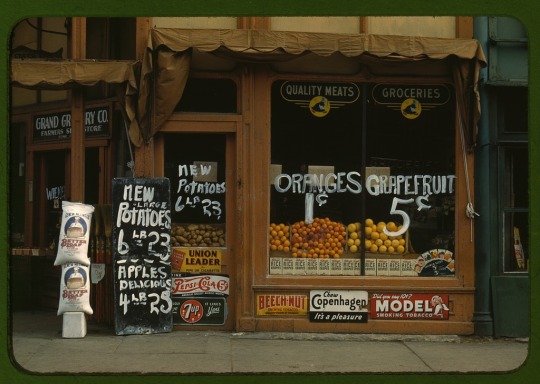
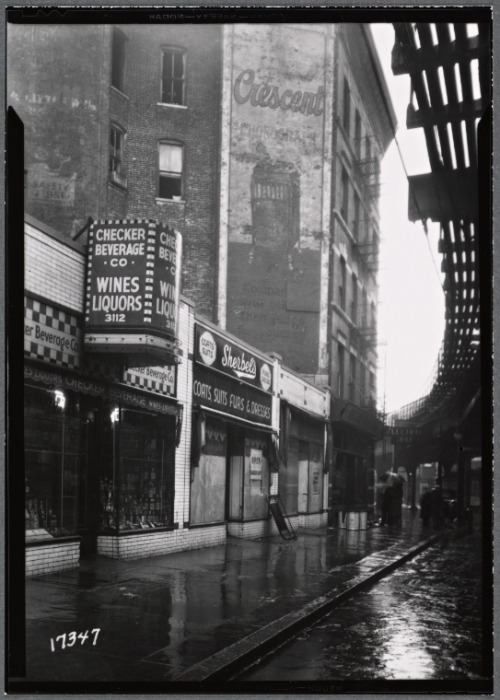
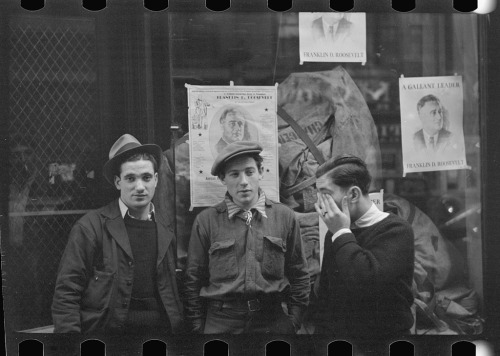
First, some basic numbers: I’ve done a couple posts already about income/rent/occupation/birthplace/etc in different Brooklyn neighborhoods, and if you want to play around with any of that data, you can see it here. But the tldr is the most likely occupation for a young working class man in 1930s Brooklyn would be, in order: file clerk/bookkeeping office work; unskilled factory work; and retail sales, making 50-70 dollars a month with rent about $25-30 a month. (You can see and play with the housing data here).
Obviously how an individual household distributed its expenses differed depending on what the household looked like, unemployment, if they were giving money to family, etc etc, but for 1935-1940, the Dept of Home Economics estimated the average distribution of expenses for working-class families in Brooklyn and NYC:
The Dept of Home Economics said that for a family of 4, a working class monthly income of $125 a month was "not so liberal as that for a ‘health and decency’ level which the skilled worker may hope to obtain, but it affords more than ‘minimum of subsistence’ living.“ My interpretation of this from working with other Dept of Home Ec records of the period is that this is slightly above what we would call poverty-level now, and more like lower middle class or working poor. Not so much that there’s much room for savings or for emergencies, but enough to make ends meet. The Dept of Home Ec said that their working-class minimum included: “The housing allowed is a 4- or 5-room house or apartment in a fair state of repair, with an indoor bath and toilet for the family’s exclusive use. The budget includes maintenance for an inexpensive radio, a daily newspaper, and attendance at the movies once a week. It does not provide an automobile. No provision is made for saving other than life-insurance premiums.” A family of 4 on $125 would be just getting by; 2 people living together would have been doing pretty ok if both were working full time and had no periods of unemployment or expensive emergencies. The Dept of Home Ec said that a monthly income of $210/month for a family of 4 would be a much more comfortable rate which would allow for some savings, leisure travel, a car, nice consumer goods and school tuition.
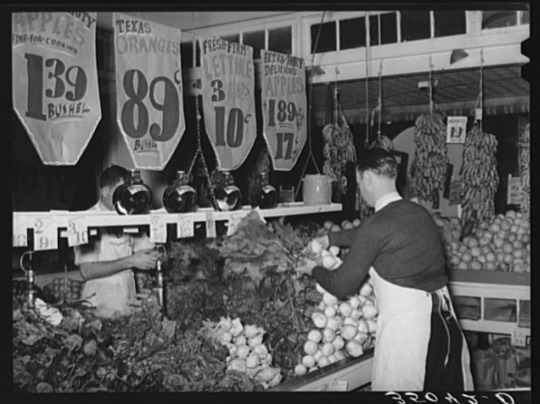
I have the numbers for distribution of food expenses, but I haven’t run them yet (I can if anyone is super interested). Food prices in Brooklyn in 1940:
Beef starting at 25 cents/lb for a roast and going up from there
Bacon 30 cents/lb
Cheapest meat available: salt port at 17 cents/lb or fresh fish at 16 cents/lb
Milk delivered quarts by the milkman: 13 cents a quart, or 52 cents for a gallon jug
Eggs 35 cents/lb
Fresh fruits and vegetables including potatoes: 2-7 cents/lb, with the exception of oranges at 27 cents/lb. Bananas were pretty affordable at 7 cents/lb.
Canned fruit and veg: slightly more expensive at 10-20 cents/can
Coffee: 20 cents/lb
If you want to see what how these numbers compare to 2015 dollars, the Beareau of Labor Statistics has a calculator here, but my check of the comparisons is that most prices seem to be roughly as expensive as they are in 2015 terms, with the exception of milk having been much more expensive at an adjusted 2015 $8/gallon and coffee having been much less expensive at an adjusted 2015 $3.50. (Milk is $4 and coffee is $8-12 in my area).
Other kinds of expenses:
Funerals: For families who buried someone in the past year, the average cost for the funeral was $70, which seems quite low to me considering the average monthly rent was around $35 or so. Meaning that a funeral was about two month’s rent, which my gut says is too low, but that’s all I have data for. At least according to the MCU phase one bonus materials, Steve’s mother died when he was 18 in 1936, putting her right in this average. Though the funeral costs ranged from 30-140 dollars, so again, unclear what the actual cost of the funeral would have been.
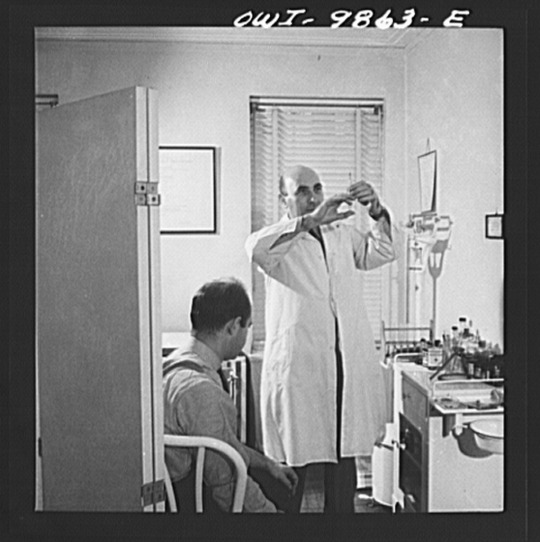
Medical care: Most working class families in the set saw the doctor 1-2 times a year, about equally likely to see the doctor in a clinic, office, or home visit, with a cost of about a dollar a visit. The Dept of Labor’s cost-of-living calculator says that’s about $17 in 2015 money, but relatively speaking I think it would have been the equivalent of closer to $50—it’s about ten beers worth, or a little on the high side of a copay for people who have insurance now. So kind of a big expense, especially if you’re seeing the doctor a lot. Most families spent around fifty cents to a dollar a month on medicines, including non prescription things like aspirin and cough syrup as well as prescriptions.
Public transportation and cars: only about 20% of families owned a car, and for those that did, Chevys, Fords and Pontiacs were the most popular across all occupation groups. Families that did own a car spent about 20 cents per person per week on public transportation including buses, streetcars, and subway lines, and families without cars spent about 30 cents per person per week. Unskilled and lower wage workers (docks, laborers, factory work) spent more on average on public transportation, probably because they lived farther from their jobs. @hansbekhart has a great post on the subway/streetcar system and costs.
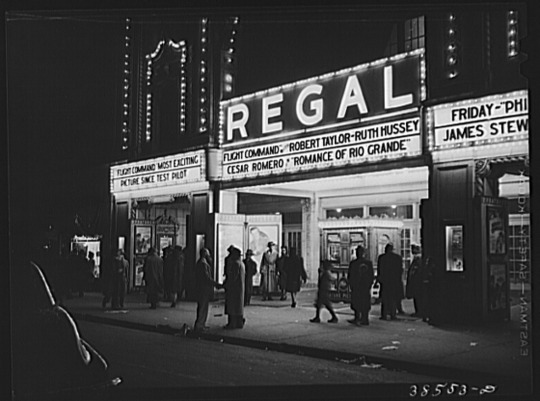
Entertainment: The average working class man in this set spent $3 a year on baseball games (and other sports, but lbr it’s probably mostly baseball). I haven’t been able to find out how much tickets in the cheap seats cost, but if it’s anything like a movie ticket (25 cents), that’s 12 games a year. Likewise, the average working class man saw a lot of movies–12-20 movies per year! Children saw more! That’s more than one movie a month, at a cost of 25 cents a movie.
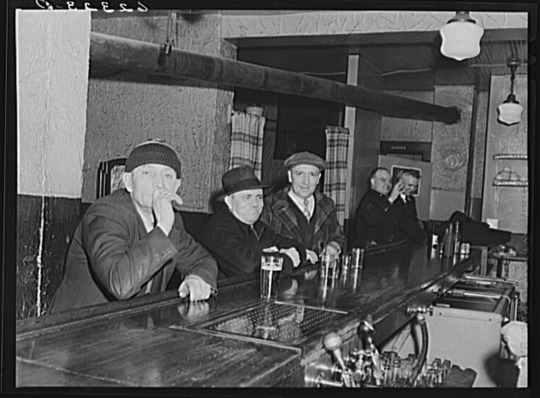
Other fun things: The average working class man in this set bought 2-5 packs of cigarettes a week. That seems like a lot to me! But I don’t smoke. Almost all men in this set reported buying at least one pack of cigarettes a week (with the exception of life insurance agents!). Likewise, almost all men reported having at least one beer a week, with the average being 3-5 beers a week at home and 2-3 beers a week outside the home, at a cost of ten cents a pint/bottle for both.
Clothes: Working class families spent around 10% of their income on clothing and related expenses, but there’s a lot of variety in this depending on how many people were in the family, so it’s hard to say how much exactly Steve and/or Bucky would have spent. My best guess based on the data: A single man, making around 50-70 dollars a month, would have put about 2-5 dollars of that towards clothes, haircuts, things like that. A man’s suit cost in the 10-40 dollar range, and the Dept of Home Ec said that about 50% of the working class men in their sample bought suits in the $17-27 range (a suit including pants, coat and vest), preferring suits in the $22-27 range. So for someone paying $30 in rent, a suit would be a pretty big deal, but in making the choice they would tend to prefer the more expensive option in their price range. Working class families also spent around a quarter a week on laundry expenses, mostly on putting laundry out to wash instead of doing it themselves. So a family would send their laundry out to a laundress who would wash it by hand, and then get back the wet laundry to hang dry themselves.
This is the stuff I was interested in, but the dataset is really big and pretty fine-detailed, so if there’s something else you want to know about, let me know!
Okay, this picture is HUUUUUUUUUUUUGE, and it’s amazing.
It’s surreal to see a world without* an atmosphere and therefore a deep black sky. And before you claim it’s fake because there aren’t any stars, that’s because camera exposure to see the surface is too short.
*technically the moon has an atmosphere, but it’s around 10-100 trillionth of ours^
^assuming you’re reading this from Earth, and this isn’t being read in the year 2050 on a Mars colony
I was zoomed in on it, trying to figure out why it was making me vaguely uncomfortable and why my mind kept insisting this was fake, and I realized the problem I was having was that I was expecting atmospheric perspective to fade the contrast on the farther objects and make the horizon hazy, but….. no atmosphere.
i… am …disturbed
The preceding comment is interesting because it highlights one of the ways that our perception of reality can be culturally influenced.
You know how sometimes, when you’re watching a movie with computer-generated special effects, you can just tell whether certain scenes are CGI, even though you can’t put your finger on exactly why?
Well, one of the things your brain is picking up on to make that determination is missing or incorrectly simulated atmospheric haze; this is highly characteristic of cheap CGI because atmospheric haze is a huge pain in the ass to correctly calculate – most low-budget productions either omit it entirely, or else fake it with simple linear distance fog.
That’s why photos of the Lunar surface and objects in outer space tend to look fake to modern audiences: we’ve been unconsciously conditioned to associate wonky atmospheric haze with bad CGI.
I’m not sure culturally influenced is the correct term but that is a really really cool fact!
Russian photographer Fox Grom on his recent walk with his dogs has captured a beautiful series of photos. He discovered a frozen lake covered with rainwater that created the illusion of the dogs walking on water. The end results are stunning, the way the water blends with the sky is unlike anything I’ve ever seen.
I HAVE HIS FUKCING ADDRESS THANK YOU GOOGLE NOW I JUST NEED TO DO A FEASIBILITY CHECK
IT DOESN’T EXIST
ALSO WTF IS UP WITH THE MOVIE @hansbekhart is having your front door opening to a vacant? lot? a normal thing? because there’s not much street going on during the “end of the line” scene.
What, in this scene?
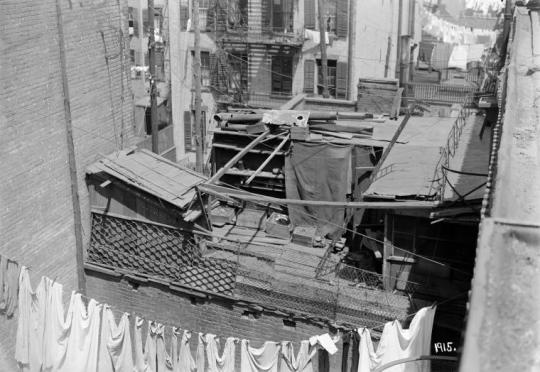
Not normal, but good history on the part of whoever set the shot that way. It looks like Steve lives in a rear tenement, the shittiest of the shitty options of tenement living. Tenements sometimes had a few buildings built onto a lot, and the ones in the back were the older, cheaper, shittier, smaller, less ventilated, more fatally hazard to your health ones.
You might pass through a courtyard or through the front tenement in order to get to your building.
Cute, right?
In each of these buildings there would’ve been literally a hundred or more people living there at any given time, often with more than ten people to each apartment. People didn’t live in these places long; Steve probably would’ve passed through a lot of these shitty places, growing up.
By the time Steve was born there’d been massive reforms to tenement living, mostly because of OG social justice warrior Jacob Riis, which did help put a halt to the crazy death rate and also gave us some oddities like windows that look into the other room.
BUT still a good chance Mrs Rogers might’ve contracted TB just from, like, the privies that still might’ve been hanging out in the yard or something.
So yeah, good history, showing that Steve definitely lived in a total shithole and is a crazy person for storing his house key where his literally hundreds of neighbors could totally break in and relieve him of whatever shitty belongings he had. Consistent characterization for the numbnuts who stored Fury’s flash drive in the super secret location of a vending machine, I guess.
Also yeah if you’re talking about Steve’s address from his cheating the draft file or whatever, that’s a total bullshit address. It’s like seven digits long, we don’t tend to do that.
i’m gonna give you a big fucking kiss one day.
i’m going with alameda avenue because it seems to also be fictional? this appeals to me.
So yeah, good history, showing that Steve definitely lived in a total shithole and is a crazy person for storing his house key where his literally hundreds of neighbors could totally break in and relieve him of whatever shitty belongings he had. Consistent characterization for the numbnuts who stored Fury’s flash drive in the super secret location of a vending machine, I guess.
OH GOD NO BUT THAT WOULD BE PERFECT. how did the jedi not think of that?
what is anakin’s biggest weakness? attachments.
you know who needs lots of attachment? babies. small children.
anakin should not have been made to study murder: he should have been put in charge of Small Things. He would have bonded with all of them instantly, and it would have given his life Meaning and Purpose.
He’d bond with the kids, but he’d be able to move on because they are Bigger now and they have to go to the Big Kid Class but he still sees them around all the time, and it finally teaches him how to let go of his attachments??? He’d find a kid that he’s particularly fond of and go to Obi-Wan and say “I have found your newest padawan.”
this could have fixed so. many. things. ;_____;
Heh, and Anakin would keep picking Obi-Wan’s padawans for him, and it would be annoying but damn if he wasn’t right every single time.
BUT CAN YOU
JUST IMAGINE HOW ANNOYED PALPATINE WOULD BE his life would be never-ending
string of trying to get a hold of Anakin (I mean, would Anakin give him a time of day if he can spend it with small kids who absolutely adore him instead?)
he keeps
comming over the years, but it’s always like
BEEP
“Anakin, my
boy, we haven’t seen each other in a while—“
“I’m sorry,
Chancellor, now’s not the best time. I’m tutoring a class.”
BEEP
“My dear
boy, I wonder if we could meet for a chat—“
“Well, it
can’t be this week, we’re going to Ilum, but maybe later…”
BEEP
“Anakin,
I’d like to—“
“I’m
terribly sorry, Chancellor,” Obi-Wan Kenobi answers. The apologetic tone might
be just a tad exaggerated. “Anakin is on a trip with younglings, he
must’ve left his comlink behind accidentally.”
BEEP
“You’ve
reached Anakin Skywalker’s private comlink. Leave the message after the tone.”
BEEP
“It’s such
a shame that Council doesn’t consider sending you on this campaign, considering
the lightsaber skills you demonstrated when I was last visiting the Temple,
Anakin.”
“Thank you,
Chancellor, but this is precisely why I need to stay behind. In fact just the
last week, the Masters decided I should take over some advanced lightsaber
classes, considering senior Padawans accompanying their Masters on the frontlines
need the training. I might take the Bear Clan along, make it a learning
opportunity for the young ones—“
Palpatine
closes his eyes slowly. He knows this from experience; Anakin won’t let himself
be budged from the topic of little monsters for at least another half an hour.
BEEP
“Ah,
Chancellor Palpatine. Anakin left his comlink behind again, he’s in class—“
BEEP
“Anakin, I
hoped you—“
“Oh! Chancellor,”
the voice on the other end is distinctly female, and Palpatine recognizes it after
a second. Kenobi’s second Padawan. He barely restrains the urge to gnash his
teeth. “Um, Skyg—I mean, Master Skywalker can’t pick up now. I can tell him you
called? It’s just that he was helping me with forms, and he forgot his comlink,
and he’s probably already in crèche…”
BEEP
Then there’s
that one time when an actual youngling picks up the call. The less said about his
reaction to that incident, the better.
BEEP
“—fortunately,
they were all right in the end. But in my opinion, this should never happened
in the first place, Chancellor.”
Palpatine
snaps awake. Was that… was that anger? Finally, the hours of listening to
worthless drivel about Jedi younglings paid off.
“My boy, I
absolutely agree,” he begins slyly, but before he can continue, Anakin steamrolls
on.
“I think Jedi
Order is too deeply entwined in the conflict! I honestly don’t think even
senior Padawans should be anywhere near battles, not to mention in command of
GAR, but now even younglings are acceptable targets for Separatists and pirates!
Master Yoda and I were talking about this lately, and—“
Palpatine
swallows a scream of rage with some difficulty.
BEEP
“Forgot his
comlink again, Master Skywalker has. With younglings, he is.”
Slaughtering
younglings moved to the top on the list of things Darth Sidious will do after
taking over galaxy some time ago.
this post keeps getting better and better
I’m gonna need like 150k more of this and a scene where Anakin kicks ass epically in a lightsaber duel to protect his creche.
This is the Great Pyramid of King Khufu. Everybody knows the Great Pyramid of King Khufu, but you probably don’t know about the Shit Pyramids of his father, King Sneferu. This is a shame, because they are amazing.
When King Sneferu came to the throne of Egypt, the cool thing that all the pharaohs had was a Step Pyramid, like the original one built by King Djoser and designed by Imhotep (not the mummy). King Sneferu could easily have had one one because his predecessor King Huni had died before his could be finished. All Sneferu had to do was step in and put the last few blocks on.
But King Sneferu had a vision. He didn’t want any old Step Pyramid. He was going to build Egypt’s first smooth-sided pyramid, and make King Huni’s pyramid way taller in the bargain. It didn’t work. The core of Huni’s pyramid couldn’t handle the modifications and nowadays the Step Pyramid at Meidum looks like this:
It’s not on a hill – that’s the outer layers of the pyramid that have fallen down all around it. The name of the structure in Arabic is Heram el-Kaddaab, which means something like The Sort-Of Pyramid.
Anyway, King Sneferu was understandably disappointed and made his pyramid-builders start over from scratch at a different site. Apparently having learned nothing about the Big Fat Nowhere that hubristic pyramid ambition was going to get him, this pyramid was designed to be even taller and pointier than the last effort! Too tall and pointy, in fact – the bedrock proved to be less stable than he might have hoped, and by the time the pyramid was half-finished stuff was already moving and cracking inside of it. There are ceilings in this pyramid that are to this day partially held up by wooden beams.
The builders seem to have panicked and decided that the only way to finish the pyramid without another disaster was to make the top half lighter than the bottom half. They did this by changing the angle of the slope, ending up with a pyramid that looks like this:
Egyptologists call this one the Bent Pyramid for fairly obvious reasons. Uniquely among Egyptian Pyramids, it has most of its smooth outer blocks intact, rather than having them all stolen to build other stuff (most of medieval Cairo is built from the skin of the Giza pyramids). I’m guessing this is because nobody dared touch the thing for fear the whole structure would come down like a giant limestone game of Jenga.
I’m sure the pyramid-builders were very proud of this solution. Sneferu appears to have been less so. He had them move over about half a mile and start over. Again. Why only half a mile when he had them move 34 miles between the Sort-of Pyramid and the Bent Pyramid is a mystery. I think he wanted to keep them in sight of the Bent Pyramid so they could look at it and feel ashamed every once in a while.
And there they built Sneferu’s third pyramid, which is called the Red Pyramid. As pyramids go, it’s a very cautious one – it’s got the shallowest slope rise of any Egyptian pyramid, and while it’s the same height as the Bent Pyramid it spreads its weight over a much greater base area, making it far more stable. Sneferu seems to have been happy with this one, because he was buried in it. Either that, or after a forty-eight-year reign he just finally died and that was the pyramid they used because it was the nicest of the three.
These three pyramids together actually contain substantially more stone than the Great Pyramid of Sneferu’s son Khufu. By the time Sneferu died, his workforce had honed themselves into a lean, mean pyramid-building machine. They had already made every possible pyramid mistake. So when Khufu announced that he didn’t just want a great pyramid, but The Great Pyramid, these guys built him a pyramid so fucking great that we now think aliens must have done it.
finally I’ve sorted (with help, because oh my god thanks for no ??? good screenshots????) Bucky’s new sniper piece and YOU GUYS:
This is a M249 Light Machine Gun.
This is !!!!! SO RAD !!!! FOR RECOVERED BUCKY!!! for so many reasons:
First of all, the M249 is a belt-fed, gas-operated American-make machine gun. It’s a most importantly for Bucky a throwback weapon, because it fires in a similar manner to his M1941 Johnson Rifle from the War. The M249 fires with an open-bolt, meaning it will provide the accuracy of a sniper rifle BUT the power, velocity, and volume of a machine gun. It fires 5.56 NATO (.45mm) cartridges, and can feed off both linked rounds AND other magazines, meaning the user could swap to an M4/M16 rifle magazine in a pinch (incredibly useful in the field).
Also, this motherfucker is HEAVY, approaching 25 pounds when loaded, and as we can see from the new spot, it’s also been retrofit with an M4 50-round magazine (can be seen over Bucky’s left forearm when he’s standing behind Steve), most likely pushing it into the 30-pound range. A weapon this heavy, with high volume fire, is a testament to Bucky’s physical endurance in both carrying and operating it, as the kick-back on a weapon this size is disruptive at best.
Additionally, even the disadvantage of this weapon caters to Bucky’s strengths: the M249 is known to heat up quickly along the barrel when in use, but, GUESS WHAT: metal hand steadying the barrel deals with that. Bucky, as always, adapting!!
Finally – the M249 has been in use by the U.S. Army and Marine Corps in every major military conflict since 1989. It’s primarily used for high-volume cover fire, but allows for sniping accuracy as well.
So consider: Bucky picking up a weapon that’s defensive in purpose. A gun that yes, can be used for sniping but is almost always used to provide cover for other fighters. A gun that can, at highest volume, discharge approximately 10 shots a second, but operates almost like the weapons he’d used in WWII.
Bucky at Steve’s six, seventy years later, choosing a weapon of defense in his own way. It might not be a shield, but he’s come a very, very long way.




 Zynn's Exodus
