People in the Middle Ages valued sweet smelling breath and bodies, seeing them as desirable, so there is a great deal of evidence from the period of tooth pastes, powders and deodorants.
Contrary to the typical Hollywood depiction of medieval peasants with blackened and rotting teeth, the average person had teeth which were in fairly good condition, mainly due to the rarity of sugar in the diet. Most medieval people could not afford sugar and those who could used it sparingly.
Archaeological data shows that only 20% of teeth had signs of decay, as opposed to 90% in the early twentieth century. The main dental problem for medieval people was not decay but wear, due to a high content of grit in the main staple, bread.
For deodorants, soap was available for the wealthy, but a variety of herbs and other preparations were also used. Soapwort is a plant native to Europe and Asia which, when soaked in water, produces an effective liquid soap. Mint, cloves and thyme were also extensively used by simply rubbing into the skin, and alum (hydrated potassium aluminium sulphate) was an effective deodorant.
I am trying to keep to 14th century technology on my pilgrimage to Canterbury, which gives me various options when looking at hygiene. In the middle ages people generally cleaned their teeth by rubbing them and their gums with a rough linen cloth, or the chewed end of a stick. There are various recipes for pastes and powders that could be put on the cloth to help clean the teeth, but I have chosen simple salt to whiten them and to aid fresh breath. I will also be using the stick method, and will be taking along a supply of liquorice root sticks for that purpose.
I also have a few blocks of alum, which when rubbed into wet skin has a deodorising effect. Alum, like beeswax, was used extensively in the middle ages for a variety of purposes, also being useful:
* in the purification of drinking water as a flocculant * as a styptic to stop bleeding from minor cuts * as a pickling agent to help keep pickles crisp * as a flame retardant * as an ingredient in modelling clay * as an ingredient in cosmetics and skin whiteners * as an ingredient in some brands of toothpaste
The photograph shows my wash kit including home made olive oil soap, salt for the teeth, a block of deodorising alum, cloves, a boxwood comb made for me by Peter Crossman of Crossman Crafts and some liquorice root sticks, all on a woollen ‘towel’. Note that the cloves are kept in a ventilated box….this is because insects hate the smell of cloves and so a perforated box will keep them out of my kit and food bag when I am sleeping rough. TIP: If you steep some cloves to obtain the oil and put the liquid around the doors and windows of your house, it keeps spiders and insects out.
Pay attention medieval-ish fantasy authors- filthy people without any cleaning or self care is Not Historical.
This is a fun option if you use, for example, phrases in other languages in your story. I often do, and this is a nice way to give translations without having to scroll to the end of the text, or putting them in the starting notes where people have to keep checking back – or where they spoiler the story!
HOWEVER. The drawback is that the floating boxes only work when a ‘mouse’ is ‘hovered’ over the marked text. They do NOT show up on tablet or phone screens, so you’ll still need to put a list of translations in the notes for readers using those devices.
Let’s have an example.
“Qu’est ce que tu veux?”
Now if you speak French, you might know that means “What do you want?”
But not all of your readers will know that. So, you offer them a translation. And since the boxes don’t appear unless you hover directly above them, I usually add a Beginning Note to the chapter that reads something like this;
‘Hover over italicised foreign language text for translations! (Mobile and tablet users please see the Ending Notes)’
In HTML mode in Ao3, (if you try this in Rich Text mode you will get a horrible mess so don’t) the line with this example would appear as:
<p>“<em>Qu’est ce que tu veux?</em>”</p>
To add the floating box with the translation, you would select the words to be translated (that is, Qu’est ce que tu veux?) and paste in the following HTML.
<span title=“What do you want?”>Qu’est ce que tu veux?</span>
The whole line will now read:
<p>“<em> <span title=“What do you want?”>Qu’est ce que tu veux?</span> </em>”</p>
Review your work, hover over the part that requires translating, and you should see the following:
And you’re done!
I tend to set up a Word doc with all the <span> lines I want to use created in it, and then when the time comes, just copy/paste them into Ao3. Saves lots of time!
You! Yes you! Fanfic authors! You no longer have any excuse to flagrantly use agonizingly jarringly modern slang in your smutty fic set anytime after 1351! These timelines cover various sex acts, terms for genitalia, bodily fluids, contraception, and, of course, orgasm. Never again will you use a period-inappropriate word in your fic set in 1940! Or 1895! Or even 1500! Yay!
Offering this resource with the caveat that we’re also missing a lot of cultural context around individual terms. (If I wrote a fic where someone is “choking the chicken”, I doubt you’d think it terribly sexy.) It’s great to think about historical accuracy, but also how your story comes across to its readers.
Oh my god I was literally JUST wondering yesterday whether there was a list like this somewhere. We truly live in a blessed age of the Internet.
You never realize how fuckin’ bright white is on a computer screen until you’ve had f.lux for a while, and suddenly disable it.
Do your eyes a favor: Get f.lux. It adapts your computer screen to the time of day in your area, and it puts a lot less strain on your eyes. If you do a lot of work from your computer–drawing, writing, etc.–it is a godsend. I was hesitant when someone first recommended it to me, but now I couldn’t do without it. Considering my tumblr dashboard theme, I’d probably be damn near blind by now if I didn’t have f.lux.
It also makes it less difficult to sleep after looking at your screen because it neutralizes the blue of the screen!
Holy shit I just installed this program and it’s been thirty seconds and my eyes ALREADY feel better.
Okay, this is in incredibly petty nitpick, but: if you’re writing a fantasy setting with same-sex marriage, a same-sex noble or royal couple typically would not have titles of the same rank – e.g., a prince and a prince, or two queens.
It depends on which system of ranking you use, of course (there are several), but in most systems there’s actually a rule covering this scenario: in the event that a consort’s courtesy title being of the same rank as their spouse’s would potentially create confusion over who holds the title by right and who by courtesy, the consort instead receives the next-highest title on the ladder.
So the husband of a prince would be a duke; the wife of a queen, a princess; and so forth.
(You actually see this rule in practice in the United Kingdom, albeit not in the context of a same-sex marriage; the Queen’s husband is styled a prince because if he were a king, folks might get confused about which of them was the reigning monarch.)
The only common situation where you’d expect to see, for example, two queens in the same marriage is if the reigning monarchs of two different realms married each other – and even then, you’d more likely end up with a complicated arrangement where each queen is technically a princess of the other’s realm in addition to being queen of her own.
You’ve gotta keep it nice and unambiguous who’s actually in charge!
Daughter of a gun (ノ´ヮ´)ノ*:・゚✧ No idea if such a thing existed but surely there had to be girls born on board in the Age of Sail?
*puts on obnoxious historian hat*
*clears throat*
there were actually tons of women and girls on board ships during the age of sail and it’s really cool history that no one!!! ever!!! talks about!!!
like captains of merchant ships used to bring their wives and children on board for long voyages all the time (and of course there were plenty of well known female pirate ship captains, and women cross-dressing as men, and prostitutes that more people seem to know of)
there’s actually a really amazing story of one woman, Mary Ann Patten who was the wife of the captain of this ship called Neptune’s Car. Captain Patten decided that he wanted her onboard with him and she was super about this and learned all about navigation and sailing and everything. so this one voyage they’re going around the tip of south america when her husband gets sick and is bed ridden with a fever right as the ship sails into one of the worst storms any of the crew had ever seen and it looks like they might lose the ship or have to stop
so you know who takes over??? the first mate???
no.
MARY
she took over the whole crew and sailed that ship through freezing water and pack ice and had it coasting smoothly into the san francisco harbour like it was nothing. and she did this all at age 19. while pregnant.
at one point the first mate tried to get the crew to mutiny against her but they all rallied with her and told him to shut the heck up because she obv knew what she was doing.
there’s a great book about women in the age of sail called ‘female tars’ by suzanne stark that i cannot recommend enough and has way more amazing stories and insights about the myriad roles women and girls played aboard ship during that time period.
(sorry i totally didn’t mean to hijack your post i love all of your art and this is gorgeous i just got over excited sorry sorry sorry)
[This was part of a larger national survey of several thousand families, and the Dept of Home Ec was at the time part of the Department of Agriculture. So far as I can tell, the Dept asked families to keep a very detailed diary of expenses for two weeks, and then did a couple of intensive follow-up interviews in person. Most of the families in this set were nuclear married couple families, so there is some limitations for applying this to two men living together or alone.]
First, some basic numbers: I’ve done a couple posts already about income/rent/occupation/birthplace/etc in different Brooklyn neighborhoods, and if you want to play around with any of that data, you can see it here. But the tldr is the most likely occupation for a young working class man in 1930s Brooklyn would be, in order: file clerk/bookkeeping office work; unskilled factory work; and retail sales, making 50-70 dollars a month with rent about $25-30 a month. (You can see and play with the housing data here).
Obviously how an individual household distributed its expenses differed depending on what the household looked like, unemployment, if they were giving money to family, etc etc, but for 1935-1940, the Dept of Home Economics estimated the average distribution of expenses for working-class families in Brooklyn and NYC:
The Dept of Home Economics said that for a family of 4, a working class monthly income of $125 a month was "not so liberal as that for a ‘health and decency’ level which the skilled worker may hope to obtain, but it affords more than ‘minimum of subsistence’ living.“ My interpretation of this from working with other Dept of Home Ec records of the period is that this is slightly above what we would call poverty-level now, and more like lower middle class or working poor. Not so much that there’s much room for savings or for emergencies, but enough to make ends meet. The Dept of Home Ec said that their working-class minimum included: “The housing allowed is a 4- or 5-room house or apartment in a fair state of repair, with an indoor bath and toilet for the family’s exclusive use. The budget includes maintenance for an inexpensive radio, a daily newspaper, and attendance at the movies once a week. It does not provide an automobile. No provision is made for saving other than life-insurance premiums.” A family of 4 on $125 would be just getting by; 2 people living together would have been doing pretty ok if both were working full time and had no periods of unemployment or expensive emergencies. The Dept of Home Ec said that a monthly income of $210/month for a family of 4 would be a much more comfortable rate which would allow for some savings, leisure travel, a car, nice consumer goods and school tuition.
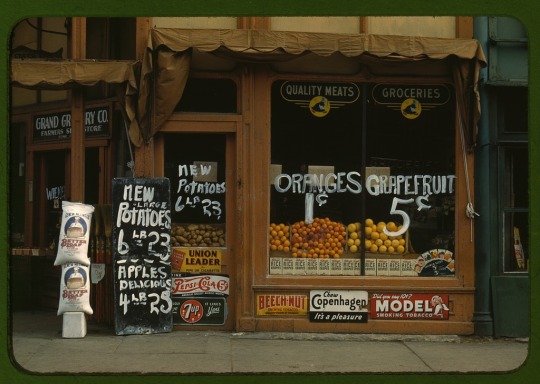
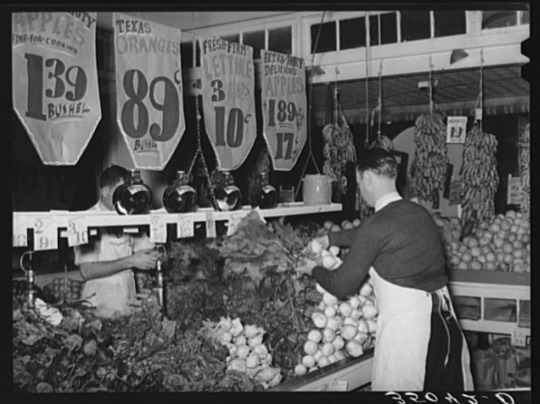
I have the numbers for distribution of food expenses, but I haven’t run them yet (I can if anyone is super interested). Food prices in Brooklyn in 1940:
Beef starting at 25 cents/lb for a roast and going up from there
Bacon 30 cents/lb
Cheapest meat available: salt port at 17 cents/lb or fresh fish at 16 cents/lb
Milk delivered quarts by the milkman: 13 cents a quart, or 52 cents for a gallon jug
Eggs 35 cents/lb
Fresh fruits and vegetables including potatoes: 2-7 cents/lb, with the exception of oranges at 27 cents/lb. Bananas were pretty affordable at 7 cents/lb.
Canned fruit and veg: slightly more expensive at 10-20 cents/can
Coffee: 20 cents/lb
If you want to see what how these numbers compare to 2015 dollars, the Beareau of Labor Statistics has a calculator here, but my check of the comparisons is that most prices seem to be roughly as expensive as they are in 2015 terms, with the exception of milk having been much more expensive at an adjusted 2015 $8/gallon and coffee having been much less expensive at an adjusted 2015 $3.50. (Milk is $4 and coffee is $8-12 in my area).
Other kinds of expenses:
Funerals: For families who buried someone in the past year, the average cost for the funeral was $70, which seems quite low to me considering the average monthly rent was around $35 or so. Meaning that a funeral was about two month’s rent, which my gut says is too low, but that’s all I have data for. At least according to the MCU phase one bonus materials, Steve’s mother died when he was 18 in 1936, putting her right in this average. Though the funeral costs ranged from 30-140 dollars, so again, unclear what the actual cost of the funeral would have been.
Medical care: Most working class families in the set saw the doctor 1-2 times a year, about equally likely to see the doctor in a clinic, office, or home visit, with a cost of about a dollar a visit. The Dept of Labor’s cost-of-living calculator says that’s about $17 in 2015 money, but relatively speaking I think it would have been the equivalent of closer to $50—it’s about ten beers worth, or a little on the high side of a copay for people who have insurance now. So kind of a big expense, especially if you’re seeing the doctor a lot. Most families spent around fifty cents to a dollar a month on medicines, including non prescription things like aspirin and cough syrup as well as prescriptions.
Public transportation and cars: only about 20% of families owned a car, and for those that did, Chevys, Fords and Pontiacs were the most popular across all occupation groups. Families that did own a car spent about 20 cents per person per week on public transportation including buses, streetcars, and subway lines, and families without cars spent about 30 cents per person per week. Unskilled and lower wage workers (docks, laborers, factory work) spent more on average on public transportation, probably because they lived farther from their jobs. @hansbekhart has a great post on the subway/streetcar system and costs.
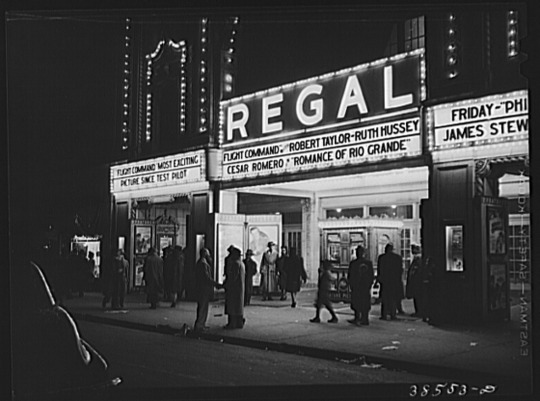
Entertainment: The average working class man in this set spent $3 a year on baseball games (and other sports, but lbr it’s probably mostly baseball). I haven’t been able to find out how much tickets in the cheap seats cost, but if it’s anything like a movie ticket (25 cents), that’s 12 games a year. Likewise, the average working class man saw a lot of movies–12-20 movies per year! Children saw more! That’s more than one movie a month, at a cost of 25 cents a movie.
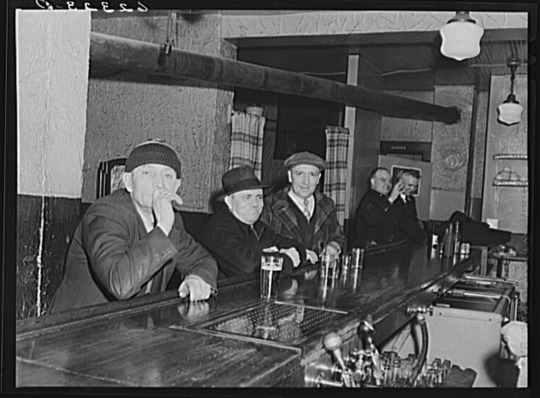
Other fun things: The average working class man in this set bought 2-5 packs of cigarettes a week. That seems like a lot to me! But I don’t smoke. Almost all men in this set reported buying at least one pack of cigarettes a week (with the exception of life insurance agents!). Likewise, almost all men reported having at least one beer a week, with the average being 3-5 beers a week at home and 2-3 beers a week outside the home, at a cost of ten cents a pint/bottle for both.
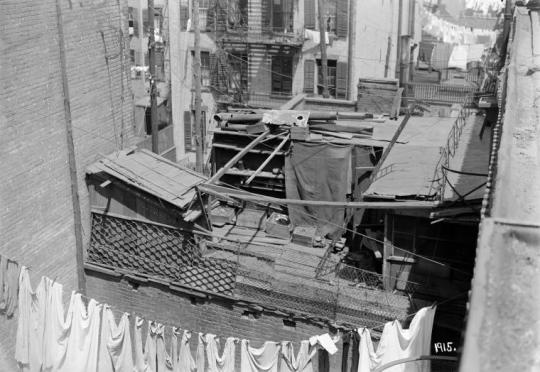
Clothes: Working class families spent around 10% of their income on clothing and related expenses, but there’s a lot of variety in this depending on how many people were in the family, so it’s hard to say how much exactly Steve and/or Bucky would have spent. My best guess based on the data: A single man, making around 50-70 dollars a month, would have put about 2-5 dollars of that towards clothes, haircuts, things like that. A man’s suit cost in the 10-40 dollar range, and the Dept of Home Ec said that about 50% of the working class men in their sample bought suits in the $17-27 range (a suit including pants, coat and vest), preferring suits in the $22-27 range. So for someone paying $30 in rent, a suit would be a pretty big deal, but in making the choice they would tend to prefer the more expensive option in their price range. Working class families also spent around a quarter a week on laundry expenses, mostly on putting laundry out to wash instead of doing it themselves. So a family would send their laundry out to a laundress who would wash it by hand, and then get back the wet laundry to hang dry themselves.
This is the stuff I was interested in, but the dataset is really big and pretty fine-detailed, so if there’s something else you want to know about, let me know!




 Zynn's Exodus